
Introduction: When a Comfort Food Classic Goes Horribly Wrong
Let me take you back to a chilly Sunday evening a few months ago. I wanted to make something deeply comforting and nostalgic for dinner, so I decided on meatloaf. Without checking a recipe, I figured, Hey, just mix ground beef with some breadcrumbs, shape it into a loaf, and bake it.
What followed was a culinary tragedy.
I baked the meatloaf uncovered for an hour and a half. When I pulled it out, it looked like a sad, dry grey brick sitting in a pool of grease. Every drop of moisture had evaporated, leaving behind a dense, crumbly texture that required a glass of water after every bite. To make matters worse, I tried to salvage it at the last second by slapping cold slices of cheddar cheese on top, which just slid off into a greasy puddle.
My family ate it in polite silence, but we all knew it was a dry disaster.
That kitchen catastrophe bruised my ego, but it also made me obsessed. I refused to let meatloaf defeat me. I spent the next few weeks testing, tweaking, and completely redesigning how to lock in moisture, infuse deep savory flavor, and create an irresistible topping.
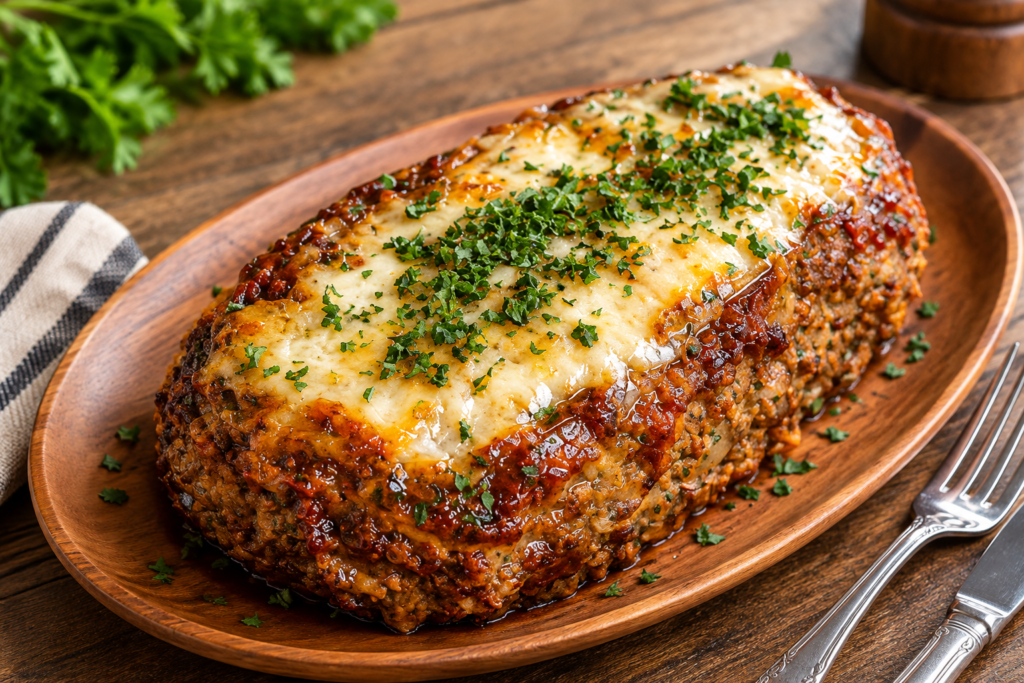
Today, I am sharing the glorious result of that journey: my absolute favorite French Onion Glazed Meatloaf. It is juicy, packed with sweet caramelized onions, blanketed in melted cheese, and once you know the secret steps, it is completely foolproof. Grab a mixing bowl and let’s dive in.
The Reality Check: Why Most Homemade Meatloaves Turn Out Dry or Dense
Before we get to the fun part of cooking, we need to talk about why making a great meatloaf at home can feel like walking through a minefield.
Have you ever baked a meatloaf, only to find that it turns out dry, crumbly, and tough? Or have you ever watched it crack open and ooze an excessive amount of grease while baking?
I made every single one of those mistakes so you don’t have to repeat them. Here are the three golden rules I learned the hard way:
- Don’t use ultra-lean beef. If you use 96% lean ground beef, your meatloaf will dry out in the oven. You need fat to keep the meat tender and juicy; an 80/20 lean-to-fat ratio is the absolute sweet spot.
- Soak your breadcrumbs in milk (the panade). Adding dry breadcrumbs straight to meat absorbs all the natural juices, making the loaf dense and dry. Mixing breadcrumbs with a splash of milk first creates a “panade” that traps moisture inside the meat fibers.
- Build deep flavor in your aromatics. Plain raw onions added to meatloaf don’t cook down enough and can leave a watery crunch. Pre-cooking and caramelizing sweet onions transforms the flavor profile completely.
With those hard-earned lessons tucked under our aprons, let’s look at what you need to stock your kitchen counter with.
The Ingredient List
For a meal that tastes like an upscale bistro interpretation of a classic comfort food, the ingredient list is surprisingly straightforward. You can find everything easily at your local grocery store.
| Category | Item | Quantity / Notes |
| The Meat Base | Ground Beef (80/20) | 2 lbs (provides the ideal fat content for juiciness). |
| The French Onion Element | Yellow Onions | 2 large yellow onions, thinly sliced for caramelization. |
| Unsalted Butter | 3 tablespoons (for caramelizing the onions). | |
| The Binder (Panade) | Panko Breadcrumbs | 3/4 cup. |
| Whole Milk | 1/3 cup (soaked with the breadcrumbs to lock in moisture). | |
| Flavor Enhancers | Eggs | 2 large eggs (binds the meatloaf together so it doesn’t crumble). |
| Worcestershire Sauce & Dijon Mustard | 2 tbsp Worcestershire sauce + 1 tbsp Dijon mustard for savory depth. | |
| Fresh Garlic | 4 cloves, freshly minced. | |
| Cheese & Topping | Provolone or Swiss Cheese | 1.5 cups, freshly shredded or sliced (Swiss or Provolone gives that authentic French onion soup flavor). |
| Fresh Parsley | 3 tablespoons, finely chopped, for a vibrant green garnish. | |
| Kosher Salt & Black Pepper | To taste. |
Step-by-Step Guidance: Building Your Masterpiece
Ready to get to work? Make sure you have a mixing bowl and a loaf pan or baking sheet ready. Let’s walk through the process step by step.
Step 1: Caramelize the Sweet Onions
- Slow Cook the Onions: Place a large skillet over medium-low heat and melt your 3 tablespoons of butter. Add your thinly sliced yellow onions.
- Patience is Key: Cook the onions slowly, stirring occasionally, for 20 to 25 minutes until they turn a deep, golden-brown, caramelized color and become sweet and tender. Remove from heat and let cool slightly. (Reserve half for the meat mixture and half for the topping!).
Step 2: Make the Panade and Mix the Meat
- In a small bowl, combine your Panko breadcrumbs and whole milk. Let them sit for 5 minutes until the milk is fully absorbed into a soft paste.
- In a large mixing bowl, combine your ground beef, the soaked breadcrumb mixture, eggs, Worcestershire sauce, Dijon mustard, minced garlic, half of your caramelized onions, salt, and black pepper.
- Use your hands to gently mix everything together until just combined. Crucial Rule: Do not overmix, or the meatloaf will become tough and dense!
Step 3: Shape and Bake
- Preheat your oven to 350°F (175°C).
- Turn the meat mixture out onto a parchment-lined baking sheet or into a lightly greased loaf pan. Shape it into a neat, uniform loaf (about 9×5 inches).
- Bake uncovered for 55 to 65 minutes, or until an instant-read thermometer inserted into the center reads 160°F (71°C).
Step 4: The French Onion Cheese Blanket
- Remove the meatloaf from the oven during the final 5 minutes of baking.
- Spread the remaining half of your caramelized onions evenly across the top of the hot meatloaf, then blanket it generously with your shredded Provolone or Swiss cheese.
- Pop it back into the oven (or switch to Broil on high for 2 minutes) until the cheese is melted, bubbling, and golden-brown.
- Scatter freshly chopped parsley across the top for a bright pop of color, and let it rest for 15 minutes before slicing!
Real Examples, Use Cases, and Life Lessons
Even seasoned home cooks run into roadblocks. Here are a few practical scenarios and common traps to keep in mind so your dinner goes off without a hitch:
- The Dry Meatloaf Trap: Overworking the meat mixture or using ultra-lean beef are the two primary reasons meatloaf turns out dry. Treat the meat gently when mixing, and always stick to an 80/20 fat ratio.
- Skipping the Resting Time: If you slice into meatloaf the exact second it comes out of the oven, all the juices will run out onto the cutting board, leaving the slices dry. Let it rest for 15 minutes so the internal juices redistribute properly.
- Leftovers and Reheating: Meatloaf makes phenomenal leftovers. Slice individual portions and reheat them in a skillet with a splash of beef broth, or pop them in the toaster oven for a quick, crispy-topped lunch.
As for serving suggestions? Slice this savory, cheese-topped meatloaf into thick portions and serve it alongside creamy mashed potatoes, roasted green beans, or a crisp green salad. Use any pan drippings to drizzle over your potatoes for maximum flavor.
Common Mistakes to Avoid Summary
To ensure your French Onion Meatloaf turns out moist, flavorful, and stunning on your very first try, keep these quick checkpoints handy:
- Don’t use lean beef: Stick to an 80/20 beef ratio to ensure your meatloaf stays juicy and tender in the oven.
- Don’t skip the panade: Soaking breadcrumbs in milk before adding them to the meat prevents a dry, crumbly texture.
- Don’t slice immediately: Let the meatloaf rest for 15 minutes after baking so it holds its shape and keeps its moisture.
Final Thoughts
That dry, grey meatloaf disaster feels like a lifetime ago now. Making an incredible, comforting classic at home isn’t about guesswork; it’s about mastering moisture retention and layering rich, savory flavors.
Next time you want a crowd-pleasing comfort food dinner that will wow your family, skip the bland recipes and spend 20 minutes of active prep making this French Onion Glazed Meatloaf.
Take your time caramelizing your onions, let the meat rest, and enjoy every single juicy, cheesy bite. Happy cooking!