
Let’s be completely honest for a second. We’ve all had those evenings when you want to make a dinner that feels intensely cozy, celebratory, and deeply satisfying, but you are terrified of ending up with a watery, sliding disaster on your plate. For the longest time, whenever I tried making homemade lasagna, I ran into a frustrating problem: I would pull it out of the oven, slice into it immediately, and watch the entire square collapse into a soupy puddle of noodles and runny ricotta sauce.
I knew I needed to figure out the exact structural science behind layering pasta, rich meat sauce, and cheese so every slice held its shape with clean, picture-perfect layers.
Once I learned how to simmer a thick meat sauce, mix a stable ricotta cheese filling, and let the baked casserole rest properly before slicing, it completely changed my Italian cooking game.
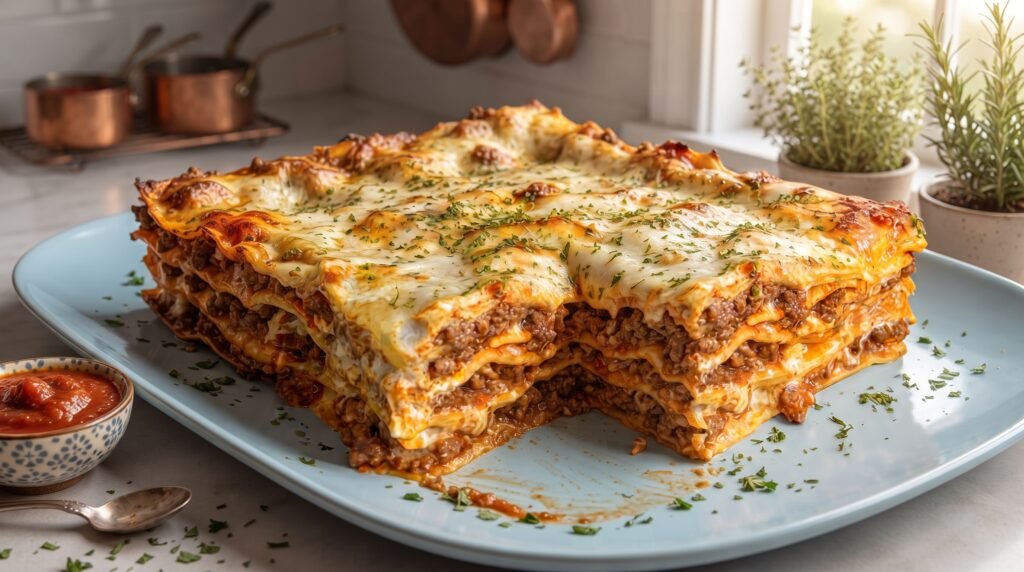
Take one look at the file named image_a9bff1.jpg, and you can see exactly why I became obsessed with mastering this recipe. Look at that gorgeous, pale blue plate holding a towering, perfectly structured square of lasagna. You can see the distinct, beautiful tiers of tender lasagna noodles, thick seasoned ground beef meat sauce, and creamy melted cheese holding their shape flawlessly, lightly garnished with fresh green herbs. In the background, the warm baking dish rests on the counter. It is the absolute definition of ultimate comfort food.
If you want to pull off a restaurant-quality lasagna that holds its layers and tastes like it simmered in an Italian grandmother’s kitchen for hours, you are in the exact right place. Let’s break down how to make this happen in your own kitchen.
Why Classic Lasagna Structure Matters
What makes this recipe so successful is how it manages moisture.
The biggest culprit behind a watery lasagna is a thin, runny meat sauce or wet ricotta. By simmering your meat sauce until it is thick and rich, and mixing an egg into your ricotta cheese to help it set during baking, you create stable structural layers.
Layering sturdy lasagna noodles between your meat sauce and a generous blanket of mozzarella ensures that every bite is rich, flavorful, and structurally sound.
Getting Your Kitchen Ready: Tools of the Trade
You don’t need any high-end culinary gadgets to pull this off, but having a few basic tools will make the process completely stress-free:
- A 9×13-inch glass or ceramic baking dish for even heat distribution.
- A heavy stockpot for boiling your lasagna noodles.
- A large skillet for browning your ground beef and simmering your marinara sauce.
- A sharp chef’s knife and a sturdy spatula for clean slicing and serving.
Ingredients You’ll Need
Before you start turning on burners, get everything measured and organized. Here is the exact lineup for this incredible layered lasagna.
| Ingredient | Amount | Notes |
| Lasagna Noodles | 1 box (16 oz) | Boiled al dente according to package instructions. |
| Ground Beef or Italian Sausage | 1.5 lbs | 80/20 lean ground beef provides the best savory flavor. |
| Marinara or Pasta Sauce | 3-4 cups | Thick, high-quality tomato sauce. |
| Ricotta Cheese | 15 oz | Whole milk ricotta for a rich, creamy middle layer. |
| Mozzarella Cheese | 3 cups | Freshly shredded for that ultimate gooey cheese blanket. |
| Parmesan Cheese | 1 cup | Freshly grated for a nutty, savory kick. |
| Egg | 1 large | Whisked into the ricotta to bind the cheese layer. |
| Yellow Onion & Garlic | 1 onion, 4 cloves | Diced and minced for aromatic depth. |
| Seasonings | to taste | Salt, black pepper, garlic powder, and Italian seasoning. |
| Fresh Parsley | for garnish | Finely chopped to sprinkle over the finished square. |
Let’s Get Cooking: Step-by-Step
Step 1: Boil the Noodles
Bring a large pot of salted water to a rolling boil. Drop in your lasagna noodles and cook them until al dente, usually about 8 to 10 minutes.
Drain the noodles carefully and lay them out flat on a sheet of parchment paper so they don’t stick together while you prepare the sauce.
Step 2: Simmer the Meat Sauce
Place your heavy skillet over medium-high heat and add your ground beef along with the diced yellow onion.
Cook until the beef is fully browned, breaking it apart with a wooden spoon. Add your minced garlic, salt, black pepper, and Italian seasoning. Pour in your marinara sauce, reduce the heat to low, and let the sauce simmer for 15 minutes until thick and rich.
Step 3: Mix the Cheese Filling
In a medium mixing bowl, combine your whole milk ricotta cheese, half of your grated parmesan cheese, your whisked egg, a pinch of salt, and garlic powder.
Stir everything together until smooth. The egg is our secret weapon here; it acts as a binder so the ricotta doesn’t ooze out when you cut into the hot lasagna.
Step 4: Layer the Casserole
Preheat your oven to 375°F (190°C).
Spread a thin layer of your meat sauce across the bottom of your 9×13 baking dish to prevent sticking. Lay down a row of lasagna noodles side-by-side. Spread a third of your ricotta mixture over the noodles, top with a layer of meat sauce, and sprinkle with mozzarella cheese. Repeat these layers twice more, ending with a final layer of noodles topped with remaining meat sauce and a heavy blanket of mozzarella and parmesan cheese.
Step 5: Bake Until Golden and Bubbly
Cover your baking dish tightly with aluminum foil (spray the underside with cooking spray so the cheese doesn’t stick to it).
Bake at 375°F for 25 minutes covered. Remove the foil and bake for an additional 15 minutes, or turn on the broiler for the last 2 minutes until the cheese is bubbling and golden-brown.
Step 6: Rest, Slice, and Serve
Remove the baking dish from the oven.
Crucial Step: Let the lasagna rest undisturbed for 20 to 30 minutes. This resting period allows the melted cheese and internal sauce to set so you can slice clean, beautiful squares. Garnish with fresh parsley and serve!
Practical Tips from My Kitchen to Yours
- Never Skip the Rest Time: Slicing lasagna straight out of the oven guarantees a messy, sliding plate. Giving it 20 minutes to rest makes all the difference.
- Use Oven-Foil Tents: When covering your baking dish with foil, tent it slightly so it doesn’t smash down onto your top cheese layer.
- Grate Your Own Cheese: Pre-packaged shredded cheese contains anti-caking starches that interfere with a smooth melt. Grating your own mozzarella creates that ultimate stretchy cheese pull.
Serving Suggestions
Because this classic layered lasagna is rich, hearty, and packed with meat, cheese, and pasta, it makes a complete feast on its own. However, a couple of simple additions round out the table nicely:
- A Crisp Caesar Salad: A cold, crunchy green salad with a sharp garlic dressing cuts right through the rich cheese and meat.
- Warm Garlic Bread: Perfect for mopping up any extra marinara sauce left on your plate.
Storage and Reheating
Store any leftover lasagna covered tightly in the refrigerator for up to 4 days.
To reheat, place individual squares in an oven-safe dish, cover with foil, and warm at 350°F (175°C) for about 15 minutes until hot all the way through. You can also microwave individual portions, though the oven helps maintain the best texture.
Common Mistakes to Avoid
- Using Watery Sauce: If your meat sauce is too thin, your lasagna will slide apart. Always simmer your sauce down until it is thick before layering.
- Overcooking the Noodles: Boil your noodles al dente because they will continue to soften as they absorb moisture from the sauce while baking in the oven.
Frequently Asked Questions (FAQs)
Can I freeze unbaked lasagna?
Yes! You can fully assemble the lasagna in a freezer-safe dish, wrap it tightly without baking, and freeze it for up to 2 months. Thaw overnight in the fridge before baking.
Do I need to boil no-boil lasagna noodles?
No-boil noodles can be used straight from the box, but you must ensure your meat sauce has enough extra liquid so the dry noodles can absorb moisture while baking.
Final Thoughts
Pulling off an incredible, restaurant-quality lasagna at home doesn’t require a culinary degree—it simply requires patience with your layers and respect for the rest time. By building a thick meat sauce, stabilizing your ricotta, and letting the casserole set before slicing, you can serve a magnificent dinner that looks and tastes like it came straight from a fine Italian bistro.
Give this classic layered lasagna a try for your next weekend family dinner, and enjoy every single comforting bite!