
I will never forget the New Year’s Eve dinner five years ago that nearly caused me to swear off making upscale seafood at home forever.
I had been daydreaming all week about creating a coastal steakhouse-style appetizer: colossal, butterflied shrimp lined up in a foil baker like little crescents, stuffed with a garlicky, herb-spiked breadcrumb filling, blanketed in melted cheese, and baked until the breadcrumbs turned golden-brown and the bottom of the pan filled with a bubbling pool of lemon-garlic butter scampi sauce.
I thought seafood was quick and easy, so I didn’t pay attention to moisture control. I bought a bag of frozen salad shrimp, thawed them half-heartedly under warm tap water, didn’t bother drying them, slapped a mountain of soggy, untoasted sandwich breadcrumbs and minced garlic on top, buried everything under a thick slab of cold mozzarella, and shoved the foil tray into a 350°F oven for twenty-five minutes.
When the timer went off, my dream appetizer was an absolute catastrophe.
The wet, water-logged shrimp had dumped a lake of salty ice-glaze water directly into the bottom of the pan as they heated. Instead of crisping, the breadcrumbs had absorbed that fishy liquid, turning into a slimy, grey paste that tasted like wet flour and raw garlic.
Worse, because they had spent twenty-five minutes baking, the shrimp had curled into tight, shriveled, rubbery knots that felt like chewing pencil erasers. The cheese had separated into a pool of greasy yellow oil floating on top of cloudy water. My guests were polite enough to nibble off a tiny forkful, but they quietly pushed the rest around their plates and reached for the dinner rolls. I spent the countdown to midnight staring into the trash can, feeling completely defeated by sixty dollars’ worth of ruined shellfish.
That humiliating dinner forced me to study the delicate thermodynamics of crustacean proteins.
Shrimp have practically zero fat and are composed of delicate muscle fibers that tighten and seize the second their internal temperature passes 140°F. If you bake them slowly or crowd them in wet conditions, they boil in their own juices.
The breakthrough came down to three specific culinary rules: you must use colossal, tail-on shrimp that are butterfly-split and patted bone-dry, you have to toast your panko breadcrumbs in garlic butter on the stovetop before assembling so they stay shatteringly crisp, and you must bake them fast at high heat (or under a direct broiler) so the shrimp cook to tender perfection in under eight minutes while the cheese melts into a velvety blanket.
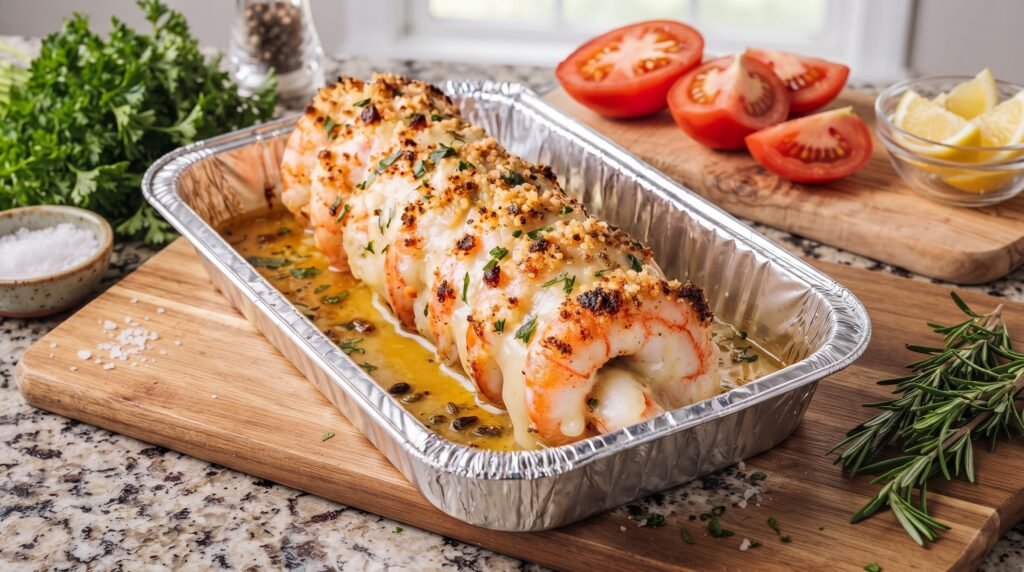
The photo above is the hard-won standard on my kitchen counter: a disposable foil loaf pan packed with colossal, pink-curled butterflied shrimp standing upright in a tight, overlapping row, crowned with a bubbly mantle of melted cheese, toasted golden breadcrumbs, and fresh parsley, all resting in a sizzling pool of lemon-garlic butter sauce.
Here is how you recreate these restaurant-quality Garlic Butter Stuffed Shrimp Scampi Boats at home without ever suffering through rubbery shrimp or soggy crumbs again.
Why Baked Stuffed Shrimp Turns Rubbery and Soggy (The Science)
Shrimp are among the quickest-cooking proteins on the planet. When high moisture meets delicate seafood inside an oven, standard kitchen mistakes will ruin your dinner:
1. The Supermarket “Plumping” Solution Trap
Most commercial frozen shrimp are treated with sodium tripolyphosphate (STPP) or brine to retain water during freezing. When exposed to heat, that trapped chemical water releases violently. If you don’t rinse your shrimp thoroughly in cold water and pat them aggressively dry with paper towels, that moisture pools in your baking dish, turning your stuffing into mush and steaming the meat instead of roasting it.
2. Untoasted Breadcrumbs vs. The Butter Sponge
Raw breadcrumbs need significant dry heat and time to toast into a golden crunch. However, shrimp can only tolerate 6 to 8 minutes of total oven heat before turning into rubber. If you put pale, raw breadcrumbs on top of raw shrimp, the crumbs will never brown before the shrimp overcook. Pre-toasting your panko breadcrumbs in melted butter and garlic in a skillet creates a golden, crunchy topping ahead of time that stays crisp even as it sits over bubbling lemon-butter juices.
3. The Low-and-Slow Oven Mistake
Never bake shrimp at 350°F (175°C)! Low temperatures drag out the cooking process, allowing the delicate proteins to slowly contract and squeeze out every molecule of internal moisture, leaving you with dry, stringy shrimp. Baking at 425°F (220°C) or giving them a fast blast under a high broiler cooks the shrimp through in minutes, keeping the interior juicy, plump, and snappy.
Ingredients & Tools You’ll Need
Essential Kitchen Gear
- Small Foil Loaf Pan or Shallow Oval Gratin Dish: (A narrow, high-sided pan—like the foil baker shown in the photo—keeps the shrimp packed tightly upright in a neat row so they support each other and catch the melted butter).
- Small Skillet: For toasting the panko breadcrumbs in garlic butter until deeply golden and fragrant.
- Sharp Paring Knife: Essential for butterflying the shrimp cleanly down the back without cutting through the belly.
- Paper Towels: Mandatory for blotting all moisture off the thawed shrimp.
- Digital Instant-Read Thermometer: Pull shrimp the second their thickest center hits 135°F to 140°F.
The Ingredient Breakdown
| Component | Ingredient | Quantity | Practical Role |
| The Star Seafood | Colossal or Jumbo Raw Shrimp (16/20 or 10/12 count) | 1 lb (approx. 10 to 12 large shrimp, peeled, tails on) | Plump, meaty crustaceans that hold stuffing without overcooking quickly. |
| The Crispy Crunch | Plain Japanese Panko Breadcrumbs | ½ cup | Airy, coarse crumbs that toast into a shatteringly crisp crown. |
| The Butter Engine | High-Fat Unsalted Butter | 6 tbsp (divided: 2 tbsp for crumbs, 4 tbsp for pan) | Creates the rich, luscious scampi pan sauce that pools at the bottom. |
| Aromatic Core | Fresh Garlic Cloves | 5 to 6 cloves (finely minced) | Infuses the butter bath and breadcrumbs with sweet bistro garlic aroma. |
| Aromatic Core | Fresh Shallot | 1 small (very finely minced) | Adds subtle, sweet French-bistro allium depth to the pan juices. |
| Acid Lift | Fresh Lemon Juice & Zest | 1.5 tbsp juice, ½ tsp zest | Bright citrus punch that cuts through rich butterfat and lifts the seafood. |
| The Deglazer | Dry White Wine (Pinot Grigio or Sauvignon Blanc) | 2 tbsp (or chicken broth) | Blends with butter and garlic to create that classic scampi emulsion. |
| The Molten Crown | Whole-Milk Mozzarella or Fontina Cheese | ¾ cup (freshly shredded) | Melts into that luscious, gooey, bubbly layer draped over the shrimp. |
| The Savory Umami | Aged Parmigiano-Reggiano | ¼ cup (freshly grated) | Adds salty, nutty sharpness that balances the sweet shrimp meat. |
| Savory Booster | Dijon Mustard & Worcestershire Sauce | ½ tsp Dijon, ½ tsp Worcestershire | The steakhouse secret that adds body and depth to the scampi butter. |
| Herbal Backbone | Dried Oregano & Smoked Paprika | ½ tsp oregano, ¼ tsp paprika | Adds warm color and gentle herbal aromatics to the breadcrumb mix. |
| Base Seasoning | Coarse Kosher Salt & Black Pepper | 1 tsp salt, ½ tsp coarse cracked black pepper | Crucial seasoning across the shrimp meat and breadcrumb crust. |
| Fresh Finish | Fresh Italian Flat-Leaf Parsley | 2 tbsp (finely chopped) | Sprinkled across the bubbling cheese for color and herbal brightness. |
Step-by-Step Cooking Instructions
Step 1: Thaw, Peel, and Butterfly the Shrimp
If using frozen shrimp, thaw them gently by placing them in a colander set inside a bowl of cold tap water for 10 to 15 minutes.
Never use warm water, which starts cooking the delicate outer flesh!
Peel the shells off the shrimp, but leave the tail segment attached.
Leaving the tails on provides structural support and makes them easy to grab when eating.
Using a small, sharp paring knife, make a deep slice down the curved back of each shrimp from the head end down to the tail, cutting about two-thirds of the way through the flesh.
Remove and discard the dark intestinal vein.
Gently spread the flesh open with your thumbs so the shrimp lies flat like an open book (butterflied).
Lay the butterflied shrimp flat across a double layer of paper towels.
Press firmly with more paper towels on top to blot out every drop of surface moisture.
Season the shrimp lightly with ½ teaspoon of coarse kosher salt and ¼ teaspoon of cracked black pepper.
Step 2: Toast the Golden Garlic Panko Crumbs (The Texture Secret)
Place a small skillet over medium heat on your stovetop.
Add 2 tablespoons of unsalted butter.
Once the butter melts and foams, add 2 cloves of the minced fresh garlic.
Sauté for 30 seconds just until fragrant—do not let the garlic brown!
Add the ½ cup of panko breadcrumbs, the dried oregano, smoked paprika, ¼ teaspoon of kosher salt, and a pinch of black pepper.
Stir continuously with a wooden spoon for 3 to 4 minutes.
The panko will drink up the garlic butter and slowly toast into a rich, fragrant, deep golden-amber crunch.
Remove the skillet from the heat immediately and stir in the ¼ cup of freshly grated Parmigiano-Reggiano.
Transfer the toasted crumbs to a small bowl to cool so they don’t scorch in the hot skillet.
Step 3: Build the Scampi Pan Sauce
Preheat your oven to 425°F (220°C).
Take your small foil loaf pan (or shallow oval baking dish).
In a microwave-safe ramekin or small pan, melt the remaining 4 tablespoons of unsalted butter.
Stir in:
- The remaining minced fresh garlic (about 3 to 4 cloves)
- The finely minced shallot
- 2 tablespoons of dry white wine (or chicken broth)
- 1.5 tablespoons of fresh lemon juice
- ½ teaspoon of fresh lemon zest
- ½ teaspoon of Dijon mustard
- ½ teaspoon of Worcestershire sauce
Pour this warm garlic-lemon butter sauce directly into the bottom of the foil pan, tilting it so the entire floor is coated in a shallow, glistening bath.
Step 4: Line Up the Shrimp “Boat”
Now, arrange the butterflied shrimp into the foil pan.
Take one butterflied shrimp and place it upright in the pan, with the tail curved upward and the split flesh resting flat against the front wall of the pan.
Take the next shrimp and tuck it snugly right behind the first one, overlapping the tail slightly (exactly like the cascading crescent pattern shown in the reference photo).
Continue shingling the shrimp down the entire length of the foil pan until you have a tight, compact, overlapping row of 10 to 12 colossal shrimp standing upright in the garlic butter bath.
Why Packing Them Snugly Works: Packing the shrimp close together keeps their tails elevated and prevents them from curling into tight little balls as they cook. The bottom halves poach gently in the lemon-garlic butter while the tops stay high and dry for the crispy cheese crown.
Step 5: Blanket with Cheese and Toasted Crumbs
Sprinkle your freshly shredded whole-milk mozzarella or fontina cheese in a continuous, generous ribbon straight down the spine of the overlapping shrimp—roughly ¾ cup of cheese total.
Make sure the cheese covers the exposed meat in the center while letting the pink-tinted tails peek out along the edges.
Now, spoon your pre-toasted golden garlic panko crumbs generously over the top of the cheese layer (as pictured in the photo).
Gently pat the crumbs with your fingers so they adhere to the cheese.
Step 6: The Fast High-Heat Bake & Broil
Slide the foil pan onto the center rack of your preheated 425°F (220°C) oven.
Bake for 6 to 8 minutes.
Watch closely through the oven door:
- You will see the lemon-garlic butter bubbling actively around the edges of the pan.
- The shrimp flesh will turn from translucent grey to an opaque, pearlescent white and bright coral pink.
- The mozzarella beneath the crumbs will melt into a gooey, molten blanket.
Now, switch your oven setting to BROIL (High) for 60 to 90 seconds.
Keep your eyes glued to the pan!
The direct broiler heat will cause the cheese to bubble up through the breadcrumbs, toasting the top into that gorgeous, speckled, golden-brown gratin crust visible in the reference photo.
The moment the breadcrumbs are toasted and the cheese is bubbling violently, pull the foil pan out immediately using oven mitts.
Step 7: Garnish, Rest, and Table Presentation
Set the sizzling foil pan onto a wooden board or trivet on your kitchen counter.
Immediately scatter finely chopped fresh Italian flat-leaf parsley across the golden, blistered cheese crust.
Squeeze a wedge of fresh lemon across the top for an extra burst of clean citrus aroma.
Cook’s Real-Life Tip: Let the pan sit undisturbed for 2 full minutes before serving!
Straight out from under the broiler, the scampi butter in the bottom of the pan is boiling hot.
During this brief rest:
- The melted cheese sets just enough into a luscious, stretchy blanket that clings to the shrimp when lifted.
- The shrimp fibers relax and absorb the garlicky, lemony pan juices from the base of the pan.
- The scampi sauce emulsifies into a rich, spoonable glaze rather than running off like clear water.
Bring the entire foil pan straight to the table alongside fresh lemon wedges and crusty bread!
Use a small fork or serving spoon to lift an individual stuffed shrimp out of the row: notice the incredible cheese pull, the crunch of the toasted butter crumbs, and the succulent, tender snap of the perfectly cooked shrimp.
Practical Troubleshooting & Common Mistakes
- “My shrimp turned out tough and rubbery.”
This is the universal hallmark of overcooking. Shrimp cook in a flash! If they stay in the oven past 9 or 10 minutes, the lean muscle fibers will seize up into rubber. Always bake at high heat (425°F) for no more than 6 to 8 minutes, and pull them the moment the flesh turns opaque pink. - “The breadcrumbs turned mushy instead of crispy.”
This happens if you skip toasting the panko in butter beforehand, or if you didn’t dry the raw shrimp thoroughly. Pre-toasting the crumbs in a skillet creates an impenetrable barrier of browned crunch that will never turn soggy under broiler steam. - “The butter sauce separated into clear grease.”
Butter breaks into oil if boiled too violently without an emulsifier. Whisking the lemon juice, white wine, and tiny dab of Dijon mustard into the melted butter before pouring it into the pan creates a stable, silky scampi sauce that stays creamy and emulsified.
Delicious Upgrades & Variations
While this classic garlic butter and herb scampi profile is the ultimate crowd-pleaser, you can easily adapt the filling to your taste:
- The Crab-Stuffed Imperial Shrimp: Fold 4 ounces of lump blue crab meat, a teaspoon of Old Bay seasoning, and a tablespoon of mayonnaise into the toasted breadcrumb mixture before stuffing the shrimp.
- The Spicy Cajun Garlic Boat: Add a teaspoon of Cajun seasoning and a dash of cayenne pepper to the breadcrumbs, swap the mozzarella for pepper jack cheese, and finish with sliced scallions.
- The Bacon-Wrapped Scampi Twist: Crisp up 3 strips of bacon, crumble them finely, and toss them directly into the toasted panko mixture before topping the cheese.
What to Serve with Baked Stuffed Shrimp Scampi
This dish is rich, buttery, and produces plenty of garlicky, lemony scampi pan sauce, making it the perfect partner for simple, absorbent sides:
- Warm Crusty Sourdough or French Baguette: Non-negotiable! You need thick, crusty slices of bread to dip straight into that sizzling pool of lemon-garlic butter at the bottom of the foil pan.
- Garlic Butter Angel Hair Pasta or Linguine: Boil thin pasta until al dente, toss it with a little olive oil, and transfer these stuffed shrimp and their entire pan of garlic butter juices right over the noodles for an instant restaurant-grade pasta dinner.
- Crisp Caesar Salad: Crisp romaine lettuce, shaved parmesan, and garlic croutons tossed in a tangy lemon dressing provide a sharp, cool contrast to the rich, melted cheese and butter.
- A Chilled Crisp White Wine: Pour a glass of crisp Pinot Grigio, Sauvignon Blanc, or an un-oaked Chardonnay. The vibrant citrus acidity in the wine cuts cleanly through the butterfat and highlights the sweet, delicate shrimp meat.
Storing and Reheating Leftovers (The Gentle Oven Method)
Seafood is undeniably best enjoyed piping-hot straight out of the oven.
However, if you happen to have a few stuffed shrimp left over, transfer them along with any pan juices into an airtight glass container and store in the refrigerator for up to 2 days.
Never reheat stuffed shrimp in the microwave! The microwave’s intense, uneven radiation will cook the delicate shrimp past its moisture threshold in fifteen seconds, turning them into rubber pellets while melting the cheese into oily grease.
Instead, use your Toaster Oven or Conventional Oven:
- Place the leftover stuffed shrimp into a small oven-safe dish.
- Spoon the leftover garlic butter juices around the base.
- Cover loosely with aluminum foil to protect the breadcrumb crust.
- Warm at 350°F (175°C) for 6 to 8 minutes just until the shrimp are warm to the touch and the cheese softens.
- Remove the foil for the final 60 seconds to re-crisp the panko crust.
The shrimp will stay tender and snappy, the breadcrumbs will regain their satisfying crunch, and you get to enjoy an elite steakhouse appetizer all over again with practically zero effort!