
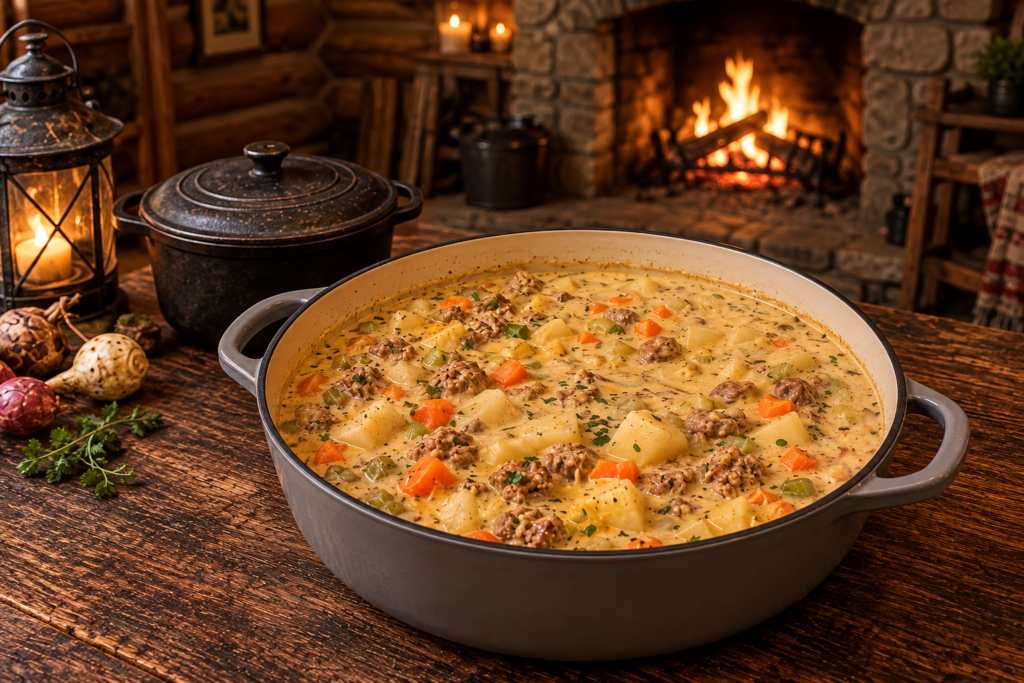

Introduction: When a Cozy Cabin Dinner Turns Into Curdled Soup
Let me take you back to a freezing winter weekend a couple of years ago. My family and I rented a rustic cabin tucked away in the mountains. Outside, a blizzard was howling, burying the porch in fresh white snow. Inside, the only source of heat was a roaring stone fireplace. It was the kind of setting that practically demands a massive, steaming pot of hearty soup simmering on the stove.
Feeling inspired by the cozy atmosphere, I decided to whip up a rich, creamy sausage and potato chowder from scratch. Without checking a reliable recipe, I figured, Hey, chowder is easy. Just chop up some potatoes, brown some sausage, dump in a carton of whole milk, and let it simmer.
What followed was a culinary catastrophe.
I threw raw breakfast sausage and chunky un-peeled potatoes into a heavy pot, poured cold whole milk straight over the top, and cranked the burner up to high because I was impatient and freezing.
Twenty minutes later, my kitchen smelled like scorching milk and sulfur.
When I pulled the lid off, the disaster was complete. Because I boiled the milk too fast without any thickener, the dairy instantly curdled and separated into a watery, grainy broth filled with greasy fat slicks. The potatoes were still crunchy and hard in the center, while the sausage had clumped together into unappealing gray lumps.
My husband took one polite bite, chewed for a very long time, and gently asked if we had any emergency cans of baked beans in the pantry.
That cabin catastrophe bruised my ego, but it also made me obsessed. I refused to let a soup defeat me. I spent the rest of that weekend testing, tweaking, and completely redesigning how to build a rich, stable, velvety chowder base that doesn’t curdle when heated.
Today, I am sharing the glorious result of that journey: my absolute favorite Creamy Sausage and Potato Chowder. It is thick, savory, incredibly comforting, and once you know the secret steps, it is completely foolproof. Grab a heavy Dutch oven and let’s dive in.
The Reality Check: Why Most Homemade Chowders Turn Out Watery or Curdled
Before we get to the fun part of cooking, we need to talk about why making a cream-based soup at home can feel like walking through a minefield.
Have you ever tried making a creamy potato soup, only to find that it looks more like skim milk with potato chunks floating in it? Or have you watched your dairy curdle and separate into an oily grease slick the second it hits a simmer?
I made every single one of those mistakes so you don’t have to repeat them. Here are the three golden rules I learned the hard way:
- Never boil your dairy. Heavy cream and whole milk hate high heat. If you let a dairy-based chowder come to a rolling boil after adding the cream, the proteins seize up, separating into an oily, grainy texture. Always simmer gently on low heat.
- Build a proper roux or thickener. Dumping cold milk into a pot creates a watery mess. Whisking a simple butter-and-flour roux combined with broth creates a stable, luxurious base that naturally thickens as it simmers.
- Par-boil or dice your potatoes right. Potatoes take time to cook through. If your potato chunks are cut too large or added too late in the cooking process, they will still be crunchy when you serve the soup.
With those hard-earned lessons tucked under our aprons, let’s look at what you need to stock your kitchen counter with.
The Ingredient List
For a meal that tastes like an expensive ski-lodge classic, the ingredient list is surprisingly straightforward. You can find everything easily at your local grocery store.
| Category | Item | Quantity / Notes |
| The Meat & Aromatics | Italian Sausage or Breakfast Sausage | 1 lb (mild or spicy, casing removed). |
| Yellow Onion & Celery | 1 medium yellow onion (diced) + 2 stalks celery (diced). | |
| Carrots | 2 medium carrots, diced (adds a lovely touch of natural sweetness and color). | |
| The Potatoes | Russet or Yukon Gold Potatoes | 3 lbs, peeled and diced into uniform 1/2-inch cubes (Yukon Golds provide a buttery flavor and hold their shape well). |
| The Broth & Dairy | Chicken Broth | 4 cups (low-sodium preferred so you can control the salt level). |
| Heavy Cream & Whole Milk | 1.5 cups heavy cream + 1.5 cups whole milk. Guarantees rich creaminess without breaking. | |
| The Thickener & Seasoning | Unsalted Butter & All-Purpose Flour | 4 tbsp butter + 1/4 cup flour (creates our foundational roux). |
| Garlic Powder & Onion Powder | 1 tsp garlic powder + 1 tsp onion powder. | |
| Fresh Parsley | 3 tablespoons, chopped, for a bright pop of green finish. | |
| Kosher Salt & Black Pepper | To taste. |
Step-by-Step Guidance: Building Your Masterpiece
Ready to get to work? Make sure you have a heavy-bottomed Dutch oven ready (just like the dark cast-iron pot resting on the wooden table in our reference photo). Let’s walk through the process step by step.
Step 1: Brown the Sausage and Build the Flavor Base
- Sauté the Sausage: Place your heavy Dutch oven over medium heat. Add your sausage, breaking it apart with a wooden spoon as it cooks. Let it brown thoroughly, then use a slotted spoon to transfer the cooked sausage to a clean plate, leaving the rendered savory drippings in the pot.
- Sauté the Vegetables: Add your diced yellow onion, celery, and carrots directly into the leftover sausage drippings in the Dutch oven. Cook for 5 to 6 minutes until the onions become translucent and the vegetables soften.
Step 2: Create the Roux and Pour the Broth
- Add your 4 tablespoons of butter to the pot, letting it melt into the vegetables.
- Sprinkle your 1/4 cup of flour evenly over the top, stirring constantly for 1 to 2 minutes to cook out the raw flour taste (creating a blonde roux).
- Slowly pour in your chicken broth, whisking vigorously the entire time to prevent any lumps from forming. Scrape up all those delicious browned bits from the bottom of the pot.
Step 3: Simmer the Potatoes
- Add your diced Yukon Gold potatoes, garlic powder, onion powder, salt, and black pepper directly into the pot.
- Bring the soup up to a gentle simmer, reduce the heat to medium-low, cover with a lid, and let it cook for 15 to 18 minutes until the potato cubes are completely fork-tender.
Step 4: The Cream Finish and Bringing It Home
- Turn your stove burner down to its absolute lowest setting.
- Slowly pour in your heavy cream and whole milk, stirring gently as the liquid transforms into a rich, velvety chowder base.
- Return your cooked sausage back into the pot, along with any delicious juices resting on the plate. Let everything warm through together for 5 minutes. Remember: do not let the soup boil after adding the dairy!
- Stir in your freshly chopped parsley, taste, and adjust with salt and pepper until it sings to your palate.
Real Examples, Use Cases, and Life Lessons
Even seasoned home cooks run into roadblocks. Here are a few practical scenarios and common traps to keep in mind so your dinner goes off without a hitch:
- The Curdled Dairy Trap: Never add heavy cream or milk to a boiling soup pot. Always lower your burner temperature to low before stirring in dairy to prevent the proteins from breaking and separating.
- Choosing the Right Potato: Russet potatoes tend to break down and dissolve into the broth, which can actually help thicken the chowder naturally. Yukon Golds maintain their shape better for distinct potato chunks. Choose based on whether you prefer a smooth chowder or a chunky one!
- Leftovers and Reheating: This chowder tastes even better on day two as the flavors marry together. When reheating leftovers, use low heat on the stovetop and stir gently. Avoid nuking it on high power in the microwave, which can cause the dairy to separate.
As for serving suggestions? Ladle this smoking-hot, creamy sausage and potato chowder into deep ceramic bowls, sprinkle fresh parsley over the top for that rustic cabin presentation, and serve it alongside warm, crusty bread or cornbread for dipping. It is the ultimate antidote to a cold winter day.
Common Mistakes to Avoid Summary
To ensure your Creamy Sausage and Potato Chowder turns out rich, velvety, and delicious on your very first try, keep these quick checkpoints handy:
- Don’t boil the dairy: Keep the heat low once the heavy cream and milk go in to prevent curdling and separation.
- Don’t skip the roux: Whisking flour into melted butter creates a stable thickener that prevents a watery soup base.
- Don’t cut potatoes too large: Dice your potatoes into uniform 1/2-inch cubes so they cook evenly and become tender in the broth.
Final Thoughts
That freezing cabin disaster feels like a lifetime ago now. Making an incredible, restaurant-quality chowder at home isn’t about being a professional chef; it’s about respecting your heat levels and building your soup foundation layer by layer.
Next time the weather turns sour, or you just need a bowl of pure, unadulterated comfort food, skip the canned aisle and spend an hour in the kitchen making this Creamy Sausage and Potato Chowder.
Take your time, keep the heat low when the cream goes in, and enjoy every single comforting spoonful. Happy cooking!