
Introduction: When a Cozy Comfort Recipe Goes Completely Wrong
Picture this: It was a freezing, miserable Sunday afternoon. The kind of day where the rain is beating against the windows, the wind is howling, and your soul is actively demanding something warm, rich, and comforting. Naturally, I decided I was going to whip up a legendary, homemade creamy Italian sausage and pasta soup from scratch. No recipe, just vibes and whatever was lingering in the fridge.
I threw everything into a large pot at once—cold milk, raw ground sausage, chopped carrots, and a mountain of dry ditalini pasta—and cranked the burner up to high because I was impatient and starving.
Thirty minutes later, my kitchen looked like a crime scene.
The milk had curdled instantly into a grainy, watery mess because I boiled it too fast. The ditalini pasta had sucked up all the liquid like little sponges, turned into complete mush, and scorched black onto the bottom of my favorite enameled Dutch oven. Worst of all, the raw sausage hadn’t browned properly and left an oily, gray film floating on top of the ruined broth.
I stood there in the quiet kitchen, staring at a pot of ruined groceries, feeling completely defeated. We ended up eating grilled cheese and canned tomato soup.
That disaster bruised my ego, but it also lit a fire under me. I spent the next three weekends turning my kitchen into a soup laboratory. I tested broths, experimented with dairy, figured out how to get that rich, velvety texture without breaking the cream, and learned how to build deep, savory flavor profiles from simple grocery store ingredients.
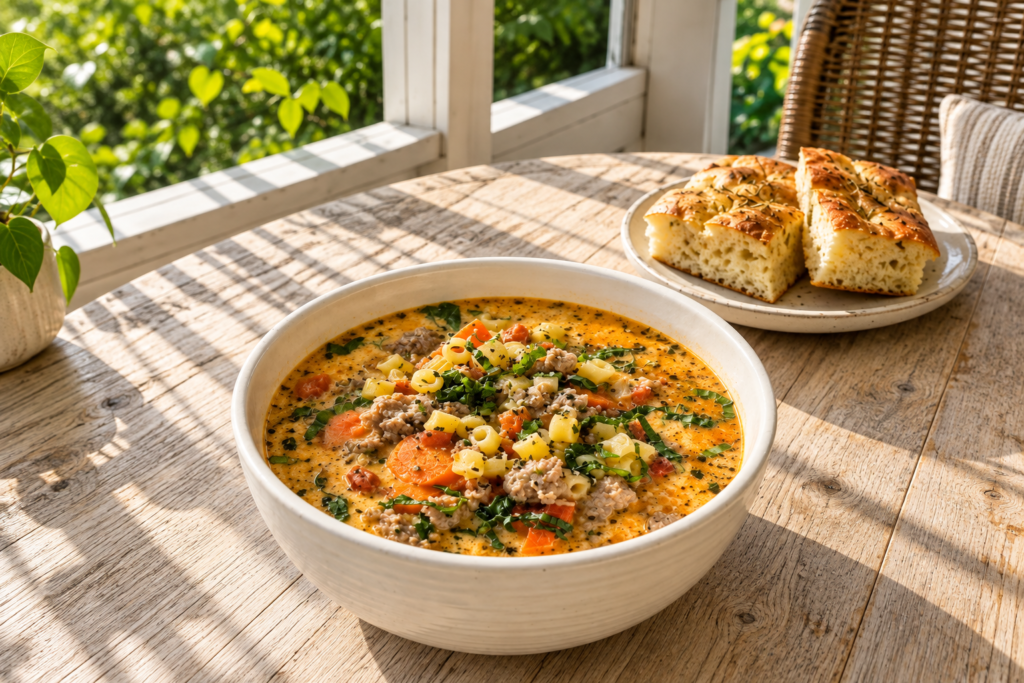
Today, I’m sharing the glorious result of that journey: my absolute favorite Creamy Italian Sausage and Ditalini Soup, served alongside warm, fluffy focaccia bread. It’s hearty, incredibly cozy, loaded with flavor, and practically foolproof once you know the secret steps. Grab a wooden spoon; let’s cook.
The Reality Check: Why Most Homemade Cream Soups Turn Out Watery or Grainy
Before we dive into the step-by-step process, let’s talk about why making a great creamy soup at home can feel like walking through a minefield.
Have you ever ordered a creamy soup at a restaurant that was thick, velvety, and coated the back of your spoon, but when you tried to make it at home, it looked more like skim milk with pasta chunks floating in it? Or worse, did your dairy split and curdle the second it hit a rolling boil?
I’ve made every single one of those mistakes so you don’t have to. Here are the three golden rules I learned the hard way:
- Never boil your dairy. Heavy cream and whole milk hate high heat. If you let a heavy dairy-based soup come to a rolling boil after adding the cream, the proteins seize up, separating into an oily, grainy texture. Always simmer gently on low heat.
- Build your foundation first. Flavor doesn’t magically appear in a soup pot; you have to build it layer by layer. Browning your Italian sausage and using those leftover savory drippings to sweat your onions, carrots, and garlic creates a flavor base that water or plain broth alone can never touch.
- Cook your pasta separately or mindfully. Pasta releases an enormous amount of starch. If you dump dry pasta directly into a large pot of cream soup and let it sit, the noodles will absorb all your liquid and turn the soup into a thick paste. We are going to manage that starch carefully so the broth stays silky and rich.
With those lessons locked in, let’s look at what you need to stock your kitchen counter with.
The Ingredient List
For a meal that tastes like it simmered on a cozy Italian bistro stove all day, the ingredient list is surprisingly accessible. You can grab everything from your local neighborhood grocery store.
| Category | Item | Quantity / Notes |
| The Meat | Italian Sausage (Mild or Spicy) | 1 lb, casing removed. Sweet or hot Italian sausage provides incredible seasoning. |
| The Veggies & Aromatics | Yellow Onion & Celery | 1 medium onion (diced) + 2 stalks celery (diced). |
| Carrots | 2 medium, sliced into nice rounds. Adds a lovely touch of natural sweetness and color. | |
| Garlic | 4 cloves, minced fresh. (Never use jarred garlic for this; fresh makes a massive difference!) | |
| The Pasta | Ditalini Pasta | 1 cup, uncooked. These little tube-like pasta shapes are the classic choice for this style of soup. |
| The Broth & Dairy | Chicken Broth | 4 cups (low-sodium is best so you can control the salt level yourself). |
| Heavy Cream | 1 cup. This is what gives the soup its rich, velvety mouthfeel. | |
| Crushed Tomatoes or Tomato Paste | 1/2 cup crushed tomatoes or 2 tbsp tomato paste to give the broth its warm, orange-tinted depth. | |
| Butter & Seasoning | Unsalted Butter & Olive Oil | 2 tbsp butter + 1 tbsp olive oil for searing. |
| Fresh Basil or Parsley | 2 tablespoons, chopped, for a bright pop of color and fresh herbal finish. | |
| Italian Seasoning & Red Pepper Flakes | 1 tsp Italian seasoning + 1/2 tsp red pepper flakes (if using mild sausage and want a kick). | |
| Kosher Salt & Black Pepper | To taste. | |
| The Side | Fresh Focaccia Bread | 1 loaf, sliced into squares. Perfect for dipping into the creamy broth! |
Step-by-Step Guidance: Building Your Masterpiece
Ready to get to work? Make sure you have a large, heavy-bottomed pot or Dutch oven ready. A heavy pot distributes heat evenly and prevents scorching on the bottom—trust me, your future self will thank you for using a good Dutch oven.
Step 1: Brown the Sausage and Build the Fond
- Place your Dutch oven over medium heat. Add the Italian sausage, breaking it apart with a wooden spoon as it cooks.
- Let it cook undisturbed for about 5 to 6 minutes until it develops a gorgeous, browned crust. As it cooks, it’ll render out some of that incredible spiced fat into the bottom of the pot.
- Use a slotted spoon to transfer the cooked sausage to a clean plate, leaving all that liquid gold (the sausage drippings) right inside the pot.
Step 2: Sauté the Aromatics and Build the Broth Base
- Turn the heat down to medium. Add your butter and olive oil directly into the leftover sausage drippings, letting them melt together.
- Toss in your diced yellow onions, sliced carrots, and celery. Cook, stirring occasionally, for about 5 to 6 minutes until the onions become translucent and the carrots start to soften.
- Stir in your minced garlic, Italian seasoning, and red pepper flakes. Cook for about 60 seconds until your kitchen smells amazing. Be careful not to burn the garlic!
- Pour in your crushed tomatoes (or tomato paste) and stir well, letting it cook for 2 minutes to caramelize slightly.
Step 3: Simmer the Broth and Cook the Pasta
- Slowly pour in your chicken broth, scraping up all those delicious browned bits from the bottom of the pot with a wooden spoon.
- Bring the mixture up to a gentle boil.
- Stir in your uncooked ditalini pasta. Reduce the heat to medium and let it simmer uncovered for about 8 to 10 minutes, stirring occasionally, until the pasta is tender and al dente.
Step 4: The Cream Finish and Bringing It Home
- Turn your stove burner down to its absolute lowest setting.
- Pour in your 1 cup of heavy cream, stirring gently as it blends into the broth. Watch the color transform into a rich, creamy, golden-orange soup base.
- Toss your cooked Italian sausage back into the pot, along with any delicious juices resting on the plate. Let everything warm through together for about 3 to 5 minutes. Remember: do not let the soup boil after adding the cream!
- Taste a spoonful. Adjust with kosher salt and freshly cracked black pepper until it sings to your palate.
Real Examples, Use Cases, and Life Lessons
Every home cook hits bumps along the road. Here are a few practical scenarios and common traps to keep in mind so your dinner goes off without a hitch:
- The Pasta Sponge Trap: If you plan on having lots of leftovers, consider cooking your ditalini pasta separately in a small pot of boiling water and adding individual scoops to each bowl before ladling the soup over it. This prevents the pasta from absorbing all the broth and swelling up into mush overnight in the fridge!
- Choosing the Right Sausage: If you like a spicy kick, use hot Italian pork sausage. If you prefer a milder, family-friendly profile, sweet Italian sausage works wonderfully and lets the herbal notes of the broth shine through.
- Leftovers and Reheating: This soup actually tastes even better on day two as the flavors marry together. However, when you reheat it, do it slowly over medium-low heat on the stovetop. If you nuke it in the microwave on high, the dairy can separate and get oily. Take your time, stir it gently, and add a tiny splash of broth if it thickened up too much overnight.
As for serving suggestions? Ladle this smoking-hot, creamy ditalini soup into deep ceramic bowls, sprinkle freshly chopped basil or parsley over the top for that restaurant-style finish, and serve it alongside a plate of warm, pillowy rosemary or garlic focaccia bread for dipping. It is the ultimate antidote to a cold, rainy day.
Common Mistakes to Avoid Summary
To ensure your chowder turns out creamy, comforting, and utterly delicious on your very first try, keep these quick checkpoints handy:
- Don’t boil after adding cream: Keep the heat low once the heavy cream goes in to prevent curdling.
- Don’t let the pasta over-soak: Stir your ditalini periodically while it simmers, or cook it separately if you are making a large batch for meal prep.
- Don’t toss the sausage drippings: That rendered fat is pure flavor gold—use it to sweat your soup vegetables!
Final Thoughts
That miserable, rainy Sunday disaster feels like a lifetime ago now. Making an incredible, restaurant-quality soup at home isn’t about being a professional chef; it’s about respecting your ingredients, managing your heat, and learning how flavors build upon one another in the pot.
Next time the weather turns sour, or you just need a bowl of pure, unadulterated comfort food, skip the canned aisle and spend an hour in the kitchen making this Creamy Italian Sausage and Ditalini Soup.
Take your time, keep the heat low when the cream goes in, and enjoy every single spoonful alongside a slice of warm focaccia. Happy cooking!