
Introduction: When a Sunday Dinner Vision Turns Into Chewy Leather
Let me take you back to a chilly Sunday afternoon a few winters ago. I wanted to create a majestic, slow-cooked Sunday dinner that would fill the entire house with the rich, savory aroma of braised meat. I picked up a gorgeous package of thick beef short ribs at the local butcher, completely confident that I could wing it without a recipe.
“How hard can it be?” I told myself with supreme overconfidence. “Just toss the raw ribs into a pot with some beef broth, onion soup mix, and red wine, crank the oven up high, and let it go.”
What followed was a culinary catastrophe.
Without searing the meat or controlling the oven temperature, I shoved the heavy pot into a blistering 425°F oven and let it bake for two hours.
When I pulled the lid off, the disaster was complete. Because I cooked it too fast at too high a temperature, the muscle fibers in the beef seized up tight. The meat was tough, stringy, and nearly impossible to chew, floating in a watery, greasy broth that tasted overwhelmingly bitter from unseared pan drippings.
My family took polite, painful bites while chewing for a solid minute per forkful.
That kitchen catastrophe bruised my ego, but it also made me obsessed. I refused to let beef short ribs defeat me. I spent the next few weeks studying braising techniques, testing liquid-to-meat ratios, and mastering how to break down tough connective tissue into meltingly tender perfection.
Today, I am sharing the glorious result of that journey: my absolute favorite Braised Beef Short Ribs in Rich Red Wine Gravy. They are fall-apart tender, deeply savory, swimming in a glossy pan sauce, and once you know the secret steps, completely foolproof. Grab a heavy Dutch oven and let’s dive in.
The Reality Check: Why Most Homemade Braised Beef Fails
Before we get to the fun part of cooking, we need to talk about why making braised beef at home can feel like walking through a minefield.
Have you ever tried making short ribs or chuck roast, only to find that the meat turns out tough, dry, and chewy? Or have you watched your braising liquid turn into a thin, greasy soup instead of a rich glaze?
I made every single one of those mistakes so you don’t have to repeat them. Here are the three golden rules I learned the hard way:
- Always sear your meat first. Getting a deep, caramelized crust on your short ribs before adding braising liquid builds the essential flavor foundation (the fond) for your entire sauce. Skipping the sear results in flat, lifeless gravy.
- Low and slow is non-negotiable. Short ribs are packed with connective tissue and collagen. To melt that collagen into gelatin (which gives the meat that melt-in-your-mouth texture), you must cook them at a gentle, low temperature (around 325°F) for 2.5 to 3 hours.
- Rest the meat before serving. Never fish your short ribs straight out of the hot braising liquid and slice them immediately. Letting them rest in the sauce off the heat allows the fibers to relax and reabsorb all those rich juices.
With those hard-earned lessons tucked under our aprons, let’s look at what you need to stock your kitchen counter with.
The Ingredient List
For a meal that tastes like an expensive French bistro classic, the ingredient list is refreshingly straightforward. You can find everything easily at your local grocery store.
| Category | Item | Quantity / Notes |
| The Star | Beef Short Ribs (Bone-In) | 3 to 4 lbs, cut into thick individual portions (look for well-marbled meat). |
| The Sear | Olive Oil or Avocado Oil | 2 tablespoons (for searing the ribs to a deep golden crust). |
| Kosher Salt & Black Pepper | 1.5 tsp salt + 1 tsp freshly cracked black pepper. | |
| Aromatics & Veggies | Yellow Onion & Carrots | 1 large yellow onion (diced) + 2 medium carrots (diced). |
| Fresh Garlic | 6 cloves, freshly minced. | |
| The Braising Liquid | Dry Red Wine (Cabernet or Merlot) | 1.5 cups. Adds incredible depth and acidity to cut through the rich beef. |
| Beef Broth or Stock | 2 cups (low-sodium preferred so you can control the salt). | |
| Tomato Paste | 2 tablespoons. Thickens the sauce and adds savory umami. | |
| Herbs & Finish | Fresh Rosemary & Thyme | 3 sprigs fresh rosemary + 4 sprigs fresh thyme. |
| Fresh Parsley | 2 tablespoons, chopped, for a bright green garnish. |
Step-by-Step Guidance: Building Your Masterpiece
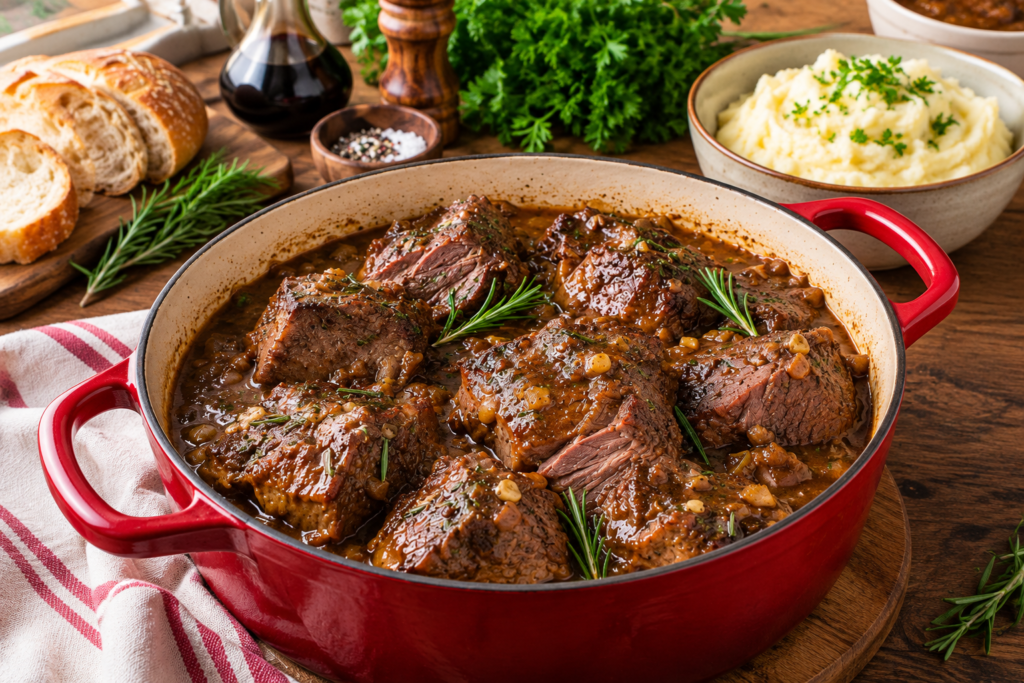
Ready to get to work? Make sure you have a heavy red enameled cast-iron Dutch oven ready (just like the stunning pot resting on the wooden counter in our reference photo). Let’s walk through the process step by step.
Step 1: Sear to a Deep Caramel Crust
- Season Generously: Pat your beef short ribs completely dry with paper towels. Season all sides generously with kosher salt and black pepper.
- The Sear: Preheat your oven to 325°F (165°C). Place your heavy Dutch oven over medium-high heat with 2 tablespoons of oil. Once hot, add the short ribs and sear them undisturbed for 3 to 4 minutes per side until they develop a deep, caramelized brown crust. Transfer the seared ribs to a clean plate.
Step 2: Build the Braising Base
- Turn your burner down to medium heat. Add your diced yellow onions and carrots directly into the rendered beef fat left in the Dutch oven. Cook for 5 minutes until soft and tender.
- Stir in your minced garlic and tomato paste, cooking for 1 minute until fragrant and brick-red in color.
- Deglaze: Pour in your dry red wine, using a wooden spoon to scrape up all those delicious caramelized browned bits stuck to the bottom of the pot. Let the wine simmer and reduce by half (about 5 minutes).
Step 3: Braise Low and Slow in the Oven
- Pour in your beef broth and nestle your seared short ribs back into the Dutch oven, spooning the aromatic vegetable sauce over them.
- Tuck your fresh rosemary and thyme sprigs right into the liquid.
- Cover the Dutch oven tightly with its heavy lid, transfer it into your preheated 325°F oven, and let it braise undisturbed for 2.5 to 3 hours. You’ll know it’s done when the meat is fork-tender and practically falling off the bone.
Step 4: Reduce the Sauce and Serve
- Carefully remove the Dutch oven from the oven. Transfer the tender short ribs to a warm platter.
- Skim any excess oil from the top of the braising liquid with a spoon. Place the pot back on the stovetop over medium heat and let the sauce simmer uncovered for 10 minutes until it thickens into a glossy, velvety red wine gravy.
- Spoon that gorgeous gravy generously over the short ribs, garnish with fresh rosemary and chopped parsley, and serve hot alongside creamy mashed potatoes or crusty artisan bread for dipping!
Real Examples, Use Cases, and Life Lessons
Even seasoned home cooks run into roadblocks. Here are a few practical scenarios and common traps to keep in mind so your dinner goes off without a hitch:
- The Fast-Cook Trap: Never try to rush short ribs by turning up the oven heat. High heat makes beef tough and stringy. Slow, gentle heat at 325°F is the only way to melt collagen into tender perfection.
- Choosing the Right Wine: Use a dry red wine that you would actually enjoy drinking (like a Cabernet Sauvignon, Merlot, or Zinfandel). Avoid sweet cooking wines, which will ruin the balance of your savory gravy.
- Leftovers and Reheating: Braised short ribs taste even more incredible on day two as the flavors deepen in the fridge. Reheat them gently in a covered skillet or Dutch oven over low heat with a splash of beef broth.
As for serving suggestions? Serve these melt-in-your-mouth braised short ribs over a massive mound of buttery garlic mashed potatoes, creamy polenta, or alongside slices of crusty sourdough bread designed specifically for mopping up that rich red wine gravy.
Common Mistakes to Avoid Summary
To ensure your Braised Beef Short Ribs turn out tender, rich, and delicious on your very first try, keep these quick checkpoints handy:
- Don’t skip searing: Always brown your short ribs on the stovetop to build a deep, flavorful foundation for your gravy.
- Don’t rush the braise: Cook low and slow at 325°F for at least 2.5 hours to tenderize the connective tissue.
- Don’t use sweet cooking wine: Choose a dry, quality red wine for your braising liquid to maintain a balanced, savory flavor profile.
Fina Thoughts
That tough Sunday roast disaster feels like a lifetime ago now. Making an incredible, restaurant-quality braised beef dinner at home isn’t about being a professional chef; it’s about mastering heat levels, building foundational flavors, and letting time do the hard work for you.
Next time you want to host an unforgettable family dinner or treat yourself to a luxurious weekend meal, skip the expensive steakhouse and spend 3 hours making these Braised Beef Short Ribs in Rich Red Wine Gravy.
Take your time, let them braise low and slow, and enjoy every single fork-tender, savory bite. Happy cooking!