
I will never forget the tailgate party three autumns ago that nearly ruined my reputation as the group’s resident grill enthusiast.
I had been daydreaming all week about creating the ultimate game-day bite: thick, succulent cubes of beef tenderloin or sirloin, stuffed with molten cheese, wrapped tightly in smoky bacon, and roasted until crisp, mahogany, and sizzling. In my head, people would pick them up with toothpicks, bite through a shatteringly crisp ring of bacon, and hit a luscious, gooey cheese pull.
I thought I could just slap it together without overthinking the physics.
I bought a package of thick-cut bacon, cut cubes of standard room-temperature cheddar cheese, crammed them into slits sliced into raw beef chunks, wrapped a single strip of cold bacon around each piece, pinned it with a toothpick, and tossed them straight onto a scorching hot smoker rack.
Twenty minutes later, dinner was an unmitigated disaster.
The cheese had melted in the first five minutes, completely liquified, and drained straight out of the meat slits, pooling into a burnt, smoking crust across the bottom of my foil tray.
Worse yet, the thick-cut bacon hadn’t crisped up at all. Because bacon takes significantly longer to render its fat than bite-sized beef takes to cook, the bacon was pale, limp, rubbery, and greasy. Meanwhile, the beef cubes inside had spent too long on the grates waiting for the bacon to brown, turning into dry, fibrous, overcooked grey nuggets. When my friends picked them up, the limp bacon slid right off, revealing hollow, meat-sponge shells with zero cheese left inside. We ended up filling up on store-bought potato chips, and I spent twenty minutes scrubbing burnt dairy off my smoker grates.
That embarrassing afternoon drove me straight into the kitchen to test every variable.
Bacon-wrapped steak bites are an incredible appetizer, but fat rendering, protein contraction, and cheese melting points operate on completely different temperature schedules.
The breakthrough came when I figured out three fundamental rules: you must freeze your cheese cubes rock-solid before stuffing, you have to use par-cooked or thin-cut bacon so the fat renders at the exact same rate the beef cooks, and you need a cross-wrap technique that seals the cheese pocket completely shut.
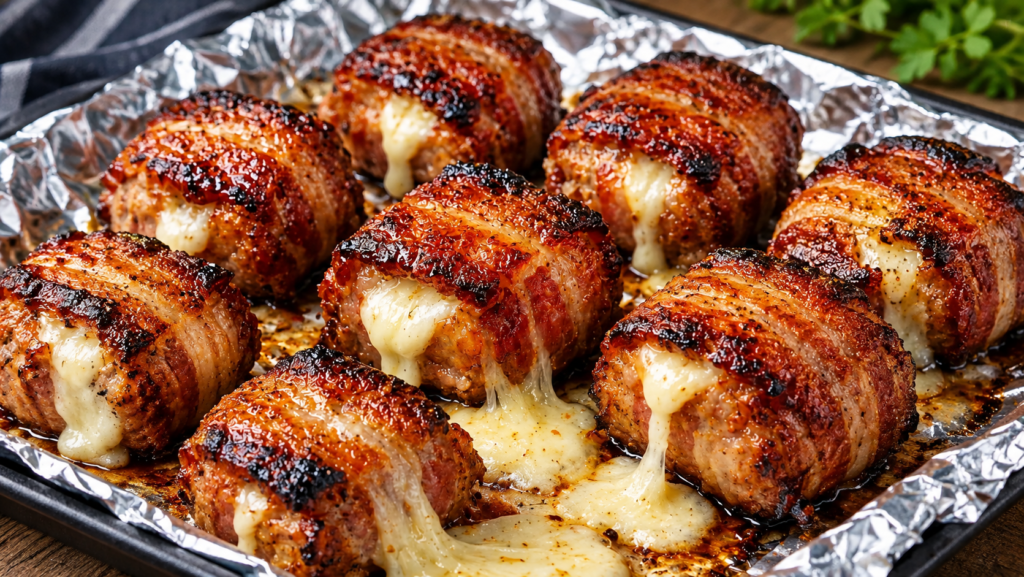
The photo above is the hard-earned victory sitting on my foil-lined baking sheet: thick, perfectly seared, bite-sized steak pillows wrapped in crisp, deeply caramelized mahogany bacon, with rich, creamy molten cheese oozing slowly onto the foil like pure liquid gold.
Here is how you make these show-stopping Bacon-Wrapped Cheese-Stuffed Steak Bites at home without losing a single drop of cheese or ending up with flabby bacon.
Why Bacon-Wrapped Stuffed Meat Bites Fail (The Science of Melting & Rendering)
Wrapping lean meat around dairy with pork fat is a complex puzzle of thermodynamics. When it goes wrong, it is usually because of these three culinary traps:
1. The Cheese Melting Point Trap
Hard cheeses like cheddar, gouda, and pepper jack begin to melt between 130°F and 150°F (55°C to 65°C). Beef steak bites reach medium-rare around 130°F, but bacon fat requires sustained temperatures above 300°F (150°C) to render and crisp. If your cheese goes into the meat at room temperature, it liquifies almost instantly, builds internal steam pressure, and blows past the meat seams into the pan long before the bacon ever crisps. Freezing your cheese cubes for at least 45 to 60 minutes beforehand creates a thermal buffer. The frozen core gently melts into molten cream just as the bacon reaches full, crispy caramelization.
2. The Thick-Cut Bacon Fallacy
Everyone loves thick-cut bacon for breakfast, but it is the enemy of wrapped appetizers. Thick-cut bacon takes at least 25 to 30 minutes to render its heavy fat layer. Bite-sized beef cubes, however, turn dry and chalky in under 12 minutes. If you use raw thick bacon, your beef will be cooked to well-done leather before the bacon even begins to crisp. Using standard thin-cut bacon (or par-cooking thick-cut bacon in the microwave for 60 seconds to render initial fat) guarantees that the bacon crisps at the exact same moment the beef reaches juicy medium tenderness.
3. The Unsealed Meat Pocket
Simply cutting a slit in a steak cube and wrapping a single strip of bacon around the center leaves the two side ends wide open. As the meat contracts under heat, the slit gapes open, creating an escape hatch for the melting cheese. Slicing a partial “pocket” rather than a through-and-through slit, and using a two-strip overlapping cross-wrap, creates a watertight seal that locks the cheese securely inside the beef cocoon.
Ingredients & Tools You’ll Need
Essential Kitchen Gear
- Rimmed Half-Sheet Baking Pan Lined with Heavy-Duty Aluminum Foil: (A sturdy metal tray lined with foil, like the one in the photo, catches all the sizzling bacon drippings while making cleanup effortless).
- Raised Wire Baking Rack (Optional): If you prefer your bacon extra crispy on all sides without resting in rendered fat.
- Sharp Paring Knife: For carving small, precise interior pockets into the beef cubes without slicing through the bottom or sides.
- Digital Instant-Read Meat Thermometer: (A ThermoWorks ThermoPop or similar digital probe ensures you pull the bites before the beef dries out).
- Wooden Toothpicks (Soaked in Water): Soaking them in water for 20 minutes prevents them from charring under high heat.
The Ingredient Breakdown
| Component | Ingredient | Quantity | Practical Role |
| The Star Beef | Top Sirloin Steak, Tenderloin, or New York Strip | 1.5 to 2 lbs (cut into 1.5-inch thick cubes) | Lean, tender beef with enough structure to hold a pocket. |
| The Crispy Wrap | Regular Thin-Cut Applewood or Hickory Smoked Bacon | 1 lb (approx. 16 to 18 strips, halved crosswise) | Renders quickly, creating that crackling, smoky outer jacket. |
| The Molten Core | Block White Cheddar, Monterey Jack, or Mozzarella | 6 to 8 oz (cut into ½-inch cubes, frozen) | Melts into that velvety, stretchy cheese pool seen in the photo. |
| The Sweet Glaze | Pure Maple Syrup or Dark Brown Sugar | 2 tbsp | Promotes fast Maillard browning and balances the salty pork. |
| Savory Booster | Worcestershire Sauce | 1.5 tbsp | Brushed on the beef for deep fermented steakhouse umami. |
| Dry Steak Rub | Garlic Powder, Smoked Paprika, Onion Powder | 1 tsp each | Seasons the beef interior and gives the bacon a rich mahogany hue. |
| Base Seasoning | Coarse Kosher Salt & Coarse Black Pepper | 1 tsp kosher salt, 1.5 tsp coarse black pepper | Crucial seasoning; note that bacon is already salty, so keep salt light. |
| Fresh Lift | Fresh Thyme or Chives | 1 tbsp (finely chopped, optional) | Sprinkled over the sizzling bacon right before serving. |
Step-by-Step Cooking Instructions
Step 1: Prep and Freeze the Cheese Cubes
Start this step at least 1 hour before you plan to cook.
Take your block of sharp white cheddar, provolone, or Monterey Jack cheese.
Using a chef’s knife, slice the cheese into uniform ½-inch cubes.
Do not make them too big, or they will split your steak open!
Place the cheese cubes in a single layer on a parchment-lined plate and slide them into the freezer for 45 to 60 minutes until they are frozen rock-solid.
Why This Step Is Non-Negotiable: Freezing the cheese completely resets its melting timeline. When the steak bites hit a hot oven or smoker, the frozen cheese absorbs heat slowly, turning into creamy, gooey lava at the exact moment the bacon turns deeply crisped and caramelized.
Step 2: Cube and Pocket the Beef
Take your top sirloin or strip steak out of the refrigerator 20 minutes before prep.
Trim off any hard exterior gristle or tough connective silver-skin.
Cut the steak into large, uniform 1.5-inch cubes.
Using a sharp paring knife, cut a deep horizontal slit into the side of each beef cube, wiggling the tip of the blade inside to create an internal cavity or pocket.
Be careful not to cut through the back, top, or bottom of the meat! You want a small cavern that holds the cheese snugly.
Pat the beef cubes dry with paper towels.
In a small bowl, mix together the garlic powder, onion powder, smoked paprika, coarse black pepper, and 1 teaspoon of kosher salt.
Lightly season the exterior and the inside pocket of each beef cube with the spice blend.
Drizzle the Worcestershire sauce over the meat, tossing gently to coat.
Step 3: Stuff and Seal the Cheese
Retrieve your frozen cheese cubes from the freezer.
Push one frozen cheese cube deep into the interior pocket of each seasoned beef chunk.
Gently pinch the meat opening closed with your fingers to encase the cheese as tightly as possible.
Step 4: The Overlapping Cross-Wrap (The Double Seal)
Take your strips of standard thin-cut bacon and slice them in half crosswise.
To wrap each bite securely:
- Lay one piece of bacon vertically across a cutting board.
- Place a stuffed beef cube right in the center, seam-side facing down.
- Wrap the bacon tightly around the cube.
- Take a second half-strip of bacon and wrap it horizontally around the cube, perpendicular to the first strip.
This cross-wrap completely envelopes all four sides of the meat cube in a tight, protective jacket of bacon fat.
Secure the bacon wrap by inserting a water-soaked wooden toothpick straight through the center.
Lightly brush the exterior of the bacon with a faint sheen of maple syrup or dust with a tiny pinch of brown sugar. This small amount of sugar caramelizes under radiant heat, giving the bacon that deep mahogany, blistered, glossy crust visible in the reference photo.
Step 5: The High-Heat Roast or Smoke
Preheat your oven, pellet grill, or smoker to 400°F (200°C).
Line a heavy rimmed baking sheet with heavy-duty aluminum foil.
Arrange the wrapped steak bites on the foil-lined sheet, leaving at least 1.5 inches of space between each piece so the hot air can circulate around the bacon.
Slide the baking sheet into the oven on the center rack (or place directly on the smoker grates).
Bake for 14 to 18 minutes.
Around the 14-minute mark, check the pan:
- The bacon should be sizzling vigorously in rendered fat, shrinking tightly around the beef, and turning a deep golden-brown.
- Slide an instant-read probe thermometer into the beef (avoiding the frozen cheese center): the meat should register between 130°F and 135°F for a juicy medium-rare/medium.
Step 6: The Broiler Crisp Finish
If your bacon isn’t quite as dark, blistered, and crispy as you want, switch your oven setting to BROIL (High) for 60 to 90 seconds.
Keep your eyes glued through the oven glass!
The direct top heat will cause the bacon fat to bubble aggressively, crisping the edges into that crackling, savory crust.
You will begin to see the molten cheese just starting to bubble and peek through the seams of the meat (exactly like the irresistible, gooey cheese pull in the photo).
Pull the baking sheet out immediately using heavy heatproof mitts.
Step 7: The Mandatory 3-Minute Rest
Set the hot baking sheet onto a wooden trivet or counter.
Important Cook’s Rule: Do not grab or bite into these steak bites immediately!
Straight out of the oven, the melted cheese inside is molten lava that will burn your mouth, and the rendered bacon fat is boiling hot.
Let the bites rest undisturbed on the foil for 3 to 4 full minutes.
During this short pause:
- The internal beef fibers relax, pulling the savory juices back into the meat.
- The molten cheese stabilizes from boiling liquid into a thick, luxurious, stretchy cream that oozes gracefully when cut or bitten into, rather than running off like water.
- The rendered bacon shell cools down just enough to turn shatteringly crisp.
Remove the toothpicks carefully.
Scatter finely chopped fresh chives or fresh thyme over the sizzling bites, and transfer them with tongs onto a warm serving platter, spooning any savory bacon-cheese drippings from the foil right over the top.
Practical Troubleshooting & Common Mistakes
- “All my cheese melted out and burned on the pan.”
This happens if you used room-temperature or shredded cheese, or if you didn’t wrap the bacon securely. Always use solid frozen cheese cubes, and always cross-wrap with two overlapping strips of bacon so all openings are sealed tight. - “The bacon was chewy and rubbery.”
You likely used thick-cut bacon or baked at too low a temperature. Thick bacon takes too long to render. Stick to regular thin-cut bacon and cook at 400°F (200°C) so the fat renders and crisps quickly. - “The beef inside turned out dry and well-done.”
Bite-sized meat cooks rapidly. If your bites stay in the oven past 20 minutes, the beef will dry out. Use an instant-read thermometer and pull the pan as soon as the meat registers 130°F to 135°F.
Delicious Flavor Upgrades & Variations
While this classic cheddar and bacon combination is the ultimate pub bite, you can easily adapt the flavor profile to match your gathering:
- The Jalapeño Popper Steak Bite: Push a tiny slice of fresh pickled jalapeño into the beef cavity alongside a cube of frozen cream cheese and cheddar before wrapping.
- The Blue Cheese & Bourbon Glaze: Stuff the beef with frozen chunks of Gorgonzola or blue cheese. Brush the bacon with a mixture of bourbon, dark brown sugar, and Worcestershire sauce during the final three minutes of roasting.
- The Garlic Herb Gouda Twist: Stuff with smoked gouda cheese and brush the finished crispy bites with warm garlic herb butter right off the pan.
What to Serve with Bacon-Wrapped Steak Bites
These rich, savory, and decadent appetizers are the undisputed star of any party spread, pairing naturally with tangy, acidic, and crisp sides:
- Creamy Horseradish Dipping Sauce: A simple mix of sour cream, prepared horseradish, Dijon mustard, and fresh chives provides a sharp, sinus-clearing kick that cuts through the rich bacon fat.
- Smoky Barbecue or Honey Mustard Sauce: Sweet and tangy dipping sauces complement the savory smoke of the applewood bacon.
- Cold Beer or Bold Red Wine: Serve alongside frosty pilsners, IPAs, or a bold glass of Cabernet Sauvignon. The tannins in the wine and the carbonation in the beer cleanse the palate between rich, cheesy bites.
Storing and Reheating Leftovers
If you manage to have any leftover steak bites, let them cool to room temperature, transfer them to an airtight glass container, and store them in the refrigerator for up to 3 days.
Never reheat bacon-wrapped steak bites in the microwave! The microwave will turn the tender beef into rubbery leather while causing the remaining cheese to separate into clear oil.
Instead, use your Air Fryer or Toaster Oven:
- Preheat your air fryer to 375°F (190°C).
- Place the leftover bites in a single layer in the basket.
- Heat for 3 to 4 minutes until the bacon is sizzling and crisp again and the cheese center is warm and melty.
They will come out just as crispy, decadent, and juicy as the moment they were pulled off the baking sheet!